
Stem Cells for Skin Regeneration: Your Guide to Natural Renewal
Read about Stem Cells for Skin Regeneration: Your Guide to Natural Renewal on faceon


Skin Stem Cell Revival: Your Pathway to Natural Youthful Radiance
Delve into the transformative role stem cells are playing in revitalizing and renewing skin. Uncover their innate capacity for healing and explore advanced therapeutic approaches designed to achieve a more youthful, healthy complexion. Gain expert perspectives to guide your journey towards optimal skin vitality.
Cellular Renewal for Skin
- Stem cells are the body's master repair crew, proficient at mending and rejuvenating skin tissues.
- They provide sophisticated solutions for combating signs of aging and repairing dermal damage.
- Emerging treatments, including exosome applications and gene-editing techniques, are vastly expanding future possibilities.
Key Takeaway: Stem cells stand as a potent foundation for inherent skin repair and a cornerstone for future rejuvenation strategies.
Decoding Stem Cells: Your Body's Intrinsic Repair System
Envision your body as possessing a special cadre of "architect" cells. These are stem cells. Unlike most other cells, they boast two extraordinary attributes that position them as truly remarkable agents of healing and regeneration.
- Self-perpetuation: They can replicate themselves endlessly without altering their fundamental nature, ensuring an uninterrupted supply of fresh cells.
- Specialized transformation: They possess the remarkable flexibility to develop into numerous distinct specialized cell types. Consider them akin to blank canvases capable of becoming skin cells, bone cells, or even neural cells whenever the demand arises.
This astounding inherent capacity is indispensable for upholding your body's wellness. Stem cells tirelessly work to replace old, deteriorated cells and mend tissues throughout your lifespan. In essence, they function as your body's built-in restorative mechanism, perpetually poised to activate whenever healing is necessary. For a deeper dive into how these cellular powerhouses operate, you can explore comprehensive stem cell research.
Key Takeaway: Stem cells are the foundational elements of the body, characterized by their ability to self-renew and morph into specialized cells to sustain and repair biological tissues.
Categories of Stem Cells and Their Significance in Dermal Health

While all stem cells share fundamental capabilities, they originate from diverse sources and exhibit varying degrees of developmental potential. For the purpose of skin regeneration, specific categories hold particular importance:
Mature Stem Cells (MSCs): Dispersed throughout your body within various tissues, mature stem cells are tasked with the upkeep and repair of the particular tissue they inhabit. They are multipotent, meaning they can differentiate into a restricted spectrum of cell types relevant to their specific origin. For skin, noteworthy MSCs include:
- Mesenchymal Stem Cells (MSCs): These represent a frequently investigated variety of adult stem cell. They can be isolated from locations such as bone marrow, adipose (fat) tissue, and umbilical cord blood. MSCs are vital because they can evolve into skin components like keratinocytes and fibroblasts, both indispensable for healthy skin. Moreover, they secrete crucial growth factors and cytokines that aid in mitigating inflammation and fostering recuperation.
- Adipose-Derived Stem Cells (ADSCs): Sourced from an individual's own fat tissue, ADSCs are a subtype of MSC that is progressively gaining traction in cosmetic procedures. They can enhance skin texture, diminish the appearance of wrinkles, and even assist with hair thinning due to their capacity to stimulate collagen synthesis and improve cutaneous blood supply.
- Umbilical Cord Mesenchymal Stem Cells (UCMSCs): These are procured from umbilical cord tissue and are highly prized for their abundance, ease of collection, minimal immunogenicity (reduced risk of immune rejection), and robust differentiation capabilities. They exhibit significant potential for addressing burns, chronic wounds, and for general facial and body rejuvenation.
Reprogrammed Pluripotent Stem Cells (iPSCs): These are mature cells that scientists have genetically re-engineered to behave like embryonic stem cells. This groundbreaking advancement enables the creation of pluripotent stem cells without the ethical concerns typically associated with embryonic stem cells. iPSCs possess the capacity to differentiate into a broader array of cell types than ASCs, thus unlocking revolutionary prospects for regenerative medicine, including various skin applications. For more insights into the revolutionary nature of these therapies, consult recent developments and future prospects in stem-cell therapy.
Key Takeaway: Adult stem cells, especially MSCs and their derivations such as ADSCs and UCMSCs, hold considerable promise for skin regeneration, alongside the pioneering capabilities of iPSCs.
The Mechanism of Stem Cell Skin Rejuvenation and Renewal
Stem cells do more than simply replace aging cells; they choreograph an intricate symphony of restorative processes to rejuvenate and renew your skin. Their multi-faceted strategy encompasses several crucial actions:
- Cellular Transformation: Stem cells can directly substitute damaged dermal cells, such as keratinocytes (the primary cells of the epidermis) and fibroblasts (cells responsible for producing collagen and elastin in the dermis). This direct replacement strategy helps rebuild the skin's structural integrity and functionality.
- Growth Factor and Cytokine Release: Stem cells excrete a potent blend of bioactive molecules. These include vital growth factors like Epidermal Growth Factor (EGF) and Vascular Endothelial Growth Factor (VEGF), alongside various cytokines. These molecules serve as chemical messengers, prompting surrounding cells to:
- Generate increased quantities of collagen and elastin, thereby enhancing skin firmness and elasticity.
- Promote angiogenesis, which is the formation of new blood vessels, delivering a richer supply of nutrients and oxygen to the skin for accelerated healing.
- Mitigate inflammation, a significant contributor to chronic skin conditions and the aging process.
- Immune System Modulation: Stem cells possess the ability to regulate the body's immune response, redirecting it from pro-inflammatory reactions toward a more healing-conducive state. This attribute is particularly advantageous for conditions like psoriasis and eczema.
- Scar Refinement: By influencing the synthesis of collagen and the activity of enzymes that break down old tissue, stem cells can assist in remodeling scar tissue, making scars less conspicuous and enhancing overall skin texture.
Key Takeaway: Stem cells contribute to skin regeneration by directly replacing compromised cells, secreting potent growth-promoting factors, moderating immune responses, and improving the quality of scar tissue.
Breakthrough Treatments: Going Beyond Innate Regeneration
The scientific comprehension of stem cells has ushered in a novel era of pioneering therapies specifically engineered to amplify their regenerative capacity for your skin. These sophisticated treatments offer precise solutions for a diverse range of dermal concerns:
| Therapy | Description The future will offer even more specialized solutions, including improved versions of gene therapy and individualized treatments that interact with the well-being of individuals. Additionally, combining various therapies might reveal novel possibilities.
Key Takeaway: Advanced approaches for skin regeneration integrate PRP, exosomes, gene therapy, and tissue engineering to stimulate repair and rejuvenation, with a clear movement toward synergistic treatment combinations.
The Horizon of Skin Regeneration: Unlocking Youthful Vitality
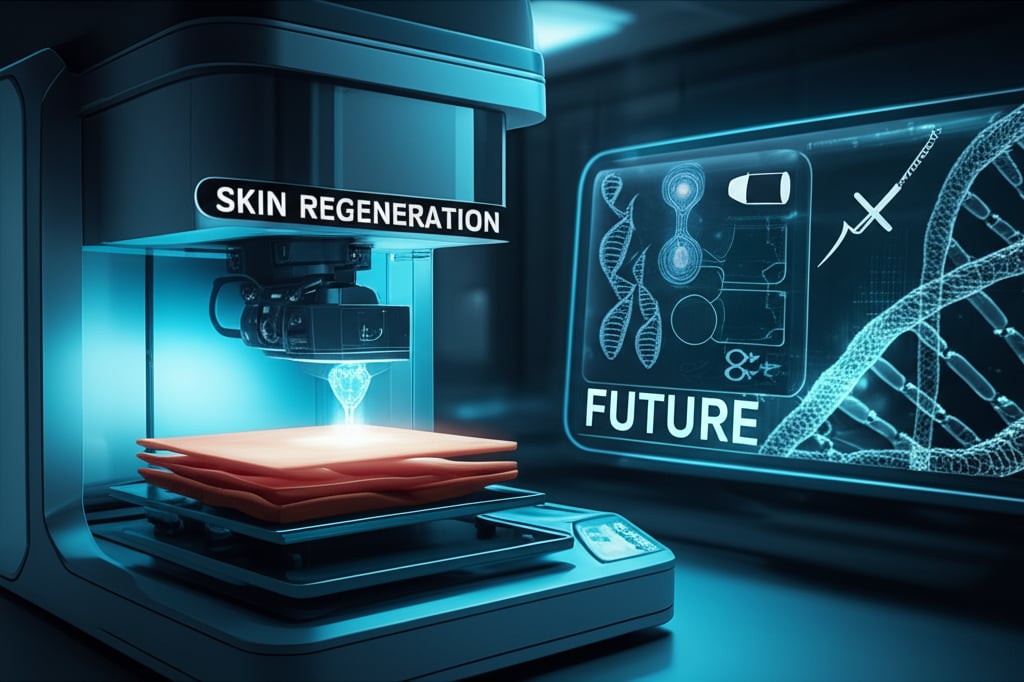
The domain of skin regeneration is perpetually evolving, with researchers investigating exhilarating new frontiers that promise even more potent and personalized treatments. Here are some pivotal domains of future advancement:
- 3D Bioprinting of Skin: Envision the capability to print skin on demand. This technology is progressively becoming a tangible reality, enabling the precise fabrication of skin tissues with elaborate structures. 3D bioprinting can customize skin grafts for wounds and injuries, and even replicate disease states for more effective drug screening. This methodology offers cost-efficient, faster production while minimizing material waste.
- Nanotechnology and Intelligent Materials: Scientists are developing minuscule "nanogels" and "nanomaterials" capable of delivering pharmaceutical agents and growth factors to specific, hard-to-reach areas of the skin. These intelligent materials can also stimulate cellular proliferation and possess antimicrobial properties, thereby enhancing wound healing and tissue regeneration.
- Enhanced Exosome Therapies: Exosomes, already a promising cell-free therapeutic avenue, are anticipated to become even more targeted and efficacious. Future research endeavors aim to standardize their isolation and delivery protocols, ensuring purity and enduring stability for widespread clinical application in anti-aging and wound recovery.
- Personalized Genetic Editing: Breakthroughs in gene editing tools, such as CRISPR-Cas9, will facilitate even more exact modifications of stem cells. This implies the potential to correct genetic mutations that contribute to skin ailments or to amplify regenerative capacities at a molecular scale, leading to truly individualized skin therapies. For a broader view on integrating these advanced techniques, consider delving into recent developments and future prospects in stem-cell therapy.
These ongoing developments herald a future where skin regeneration treatments are not only more powerful but also highly customized to each individual's unique genetic blueprint and specific requirements, bringing closer the aspiration of prolonged skin health and vibrancy.
Key Takeaway: The future landscape of skin regeneration encompasses highly individualized solutions achieved through 3D bioprinting, sophisticated nanotechnology, refined exosome applications, and precision genetic editing.
Opting for Credible Expertise on Your Skin Journey
Embarking on a quest for advanced skin regeneration, especially when exploring options like Korean cosmetic surgery, necessitates trust and diligent guidance. You merit access to accomplished medical professionals and clinics who are at the vanguard of these pioneering therapies.
Here’s how to ensure a secure and supportive experience:
- Identify Verified Professionals: Always select clinics and doctors with established reputations and verifiable credentials. Seek out evidence of their expertise and an unwavering commitment to patient safety.
- Prioritize Clear Communication: Grasping complex medical information is paramount. Ensure your chosen platform or clinic offers exemplary communication support, ideally including language services.
- Value Comprehensive Consultations: A thorough initial consultation is vital for clarifying your objectives, understanding the procedure, and addressing any concerns. This step is indispensable for making well-informed decisions.
Specialized online services excel at connecting international clients with highly regarded clinics and doctors, particularly within the Korean cosmetic surgery sector. These services simplify the entire process – from discovery to consultation and booking – often through intuitive, chat-based applications that include live audio translation. This fosters transparent and confidential communication, allowing you to discuss advanced skin regeneration options with expert medical professionals from your home. Such resources are designed to empower you with informed choices, ensuring a seamless and supportive medical tourism experience that prioritizes your well-being and desired outcomes. For those seeking pathways to exceptional care in skin rejuvenation, comprehensive information can be found through leading online insights in this field.
Key Takeaway: For intricate skin regeneration treatments, selecting trusted experts who provide clear communication and comprehensive assistance, such as those found through reputable online insights, is crucial for a secure and confident experience.
FAQ
What is the primary role of stem cells in renewing skin?
Stem cells predominantly function as the body's intrinsic repair mechanism. They possess the capacity for self-renewal, enabling them to generate more stem cells, and can differentiate into various specialized skin cells, thereby replacing damaged ones and revitalizing tissue. This fundamental process helps maintain the skin's health and integrity.
Are there distinct categories of stem cells utilized for skin treatments?
Indeed, several types are employed. Adult stem cells, particularly Mesenchymal Stem Cells (MSCs) derived from sources like adipose tissue (ADSCs) and umbilical cord blood (UCMSCs), are frequently applied. Induced Pluripotent Stem Cells (iPSCs) also present significant future potential for therapeutic applications.
How do stem cells contribute to diminishing wrinkles and enhancing skin elasticity?
Stem cells foster youthful skin by secreting essential growth factors and cytokines. These molecular messengers stimulate the skin's own cells to intensify the production of collagen and elastin, which are vital proteins providing structure, firmness, and suppleness. This action consequently reduces wrinkles and improves overall skin texture.
Which modern therapies are based on stem cells for skin?
Contemporary therapies include Platelet-Rich Plasma (PRP), which leverages your body's inherent growth factors, and exosome-based treatments that deliver regenerative molecules. Advanced methods like gene editing and 3D bioprinting are also emerging, aimed at creating personalized solutions for skin repair and rejuvenation.
Are stem cell therapies for skin regeneration widely accessible and safe?
While many therapies show considerable promise, some are still in their nascent stages of development. The safety and efficacy of these treatments vary depending on the specific therapy type and prevailing regulatory standards. It is paramount to seek guidance from verified, expert medical professionals who strictly adhere to safety protocols for any advanced procedure.